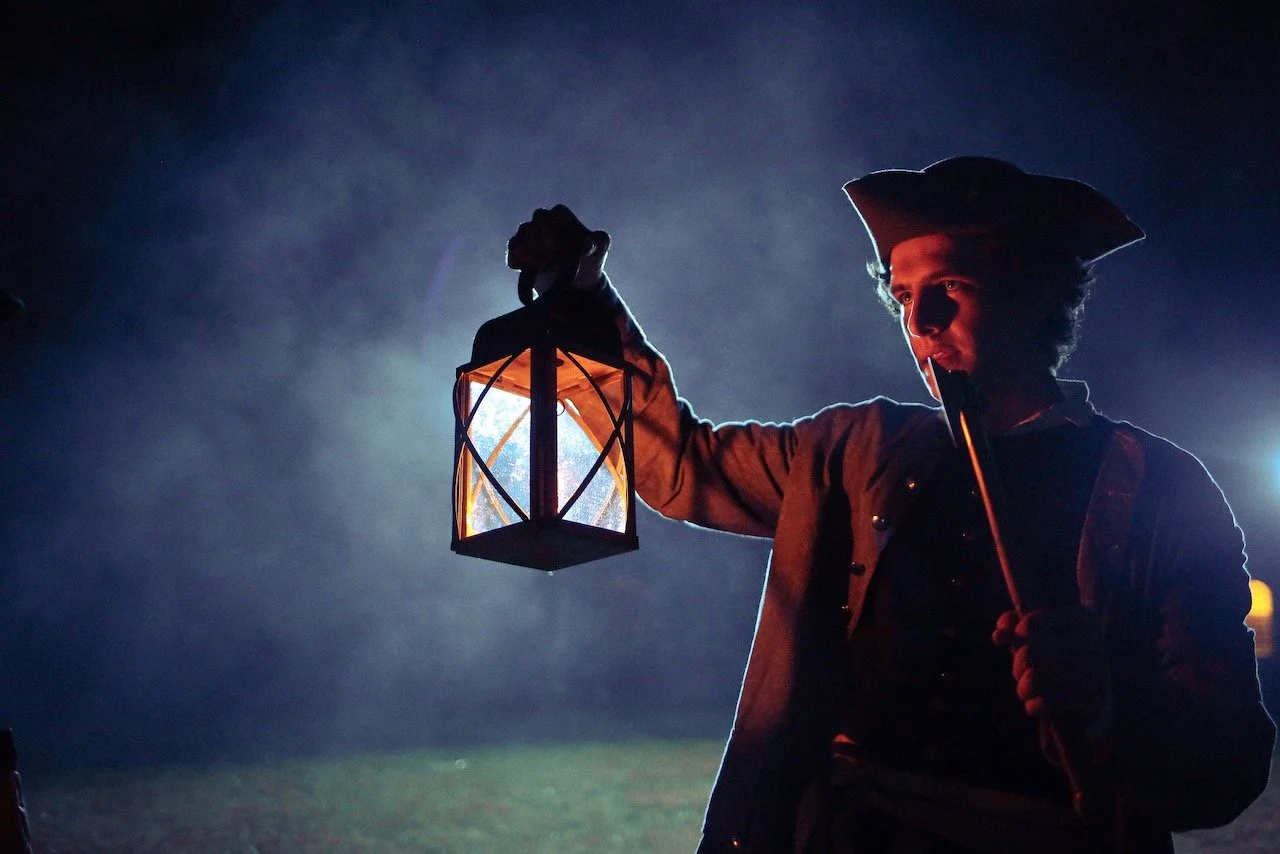
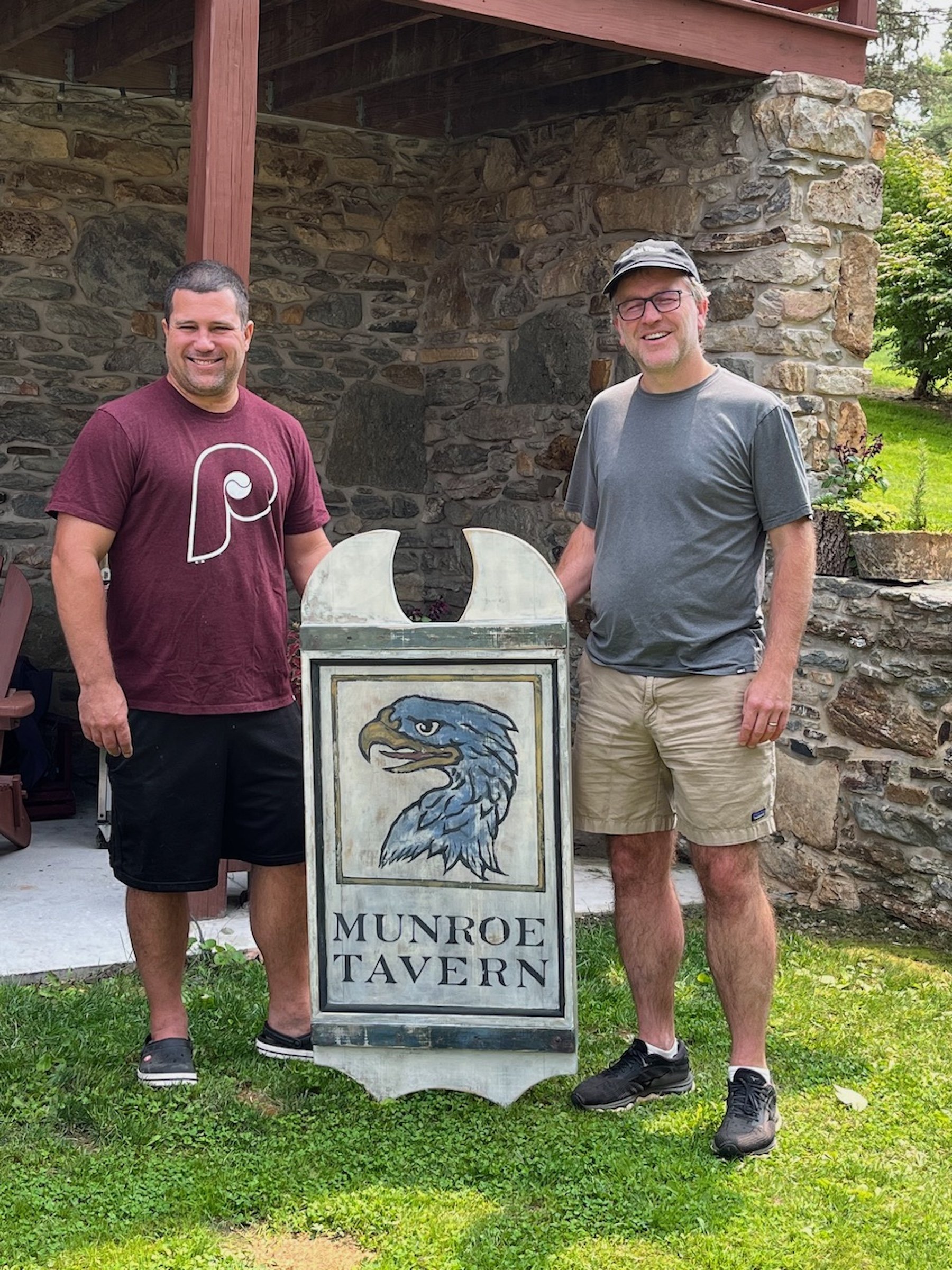
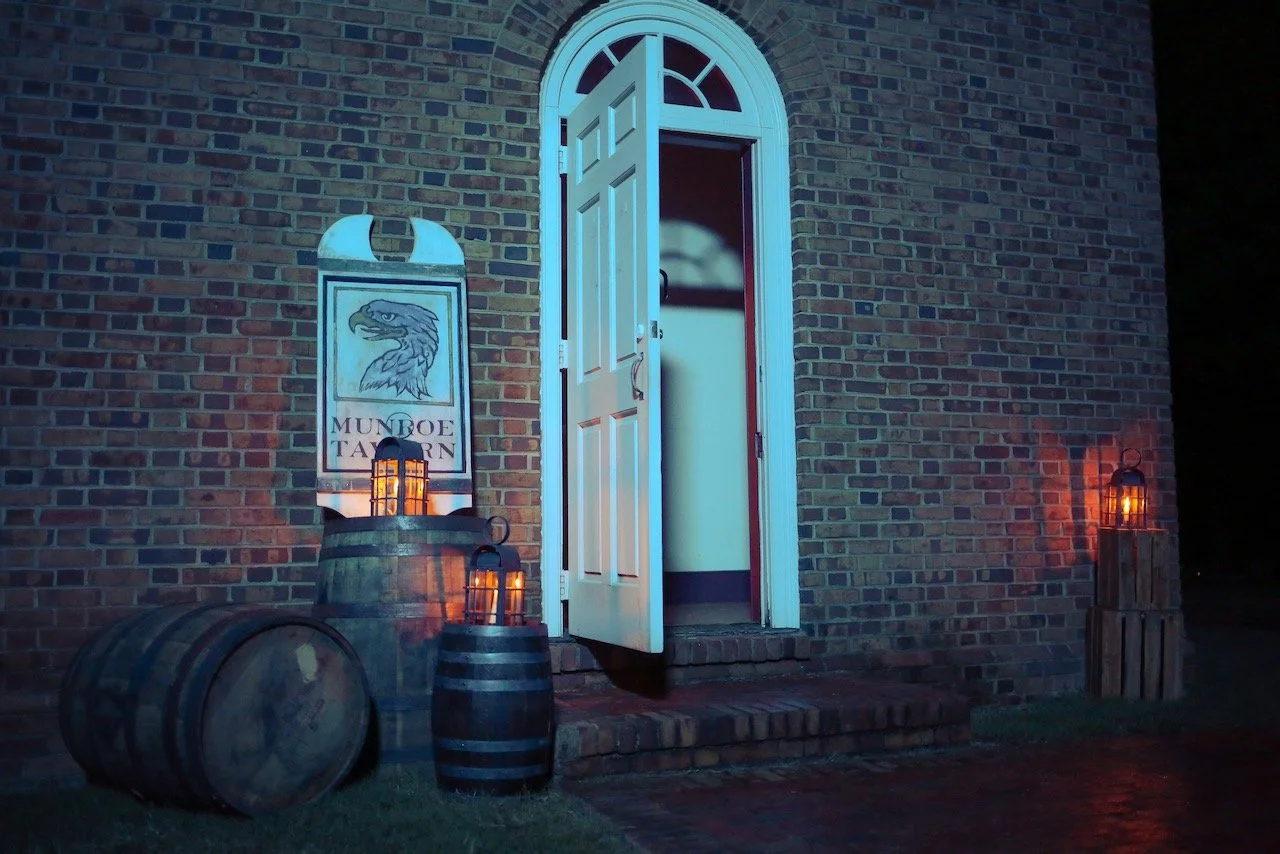
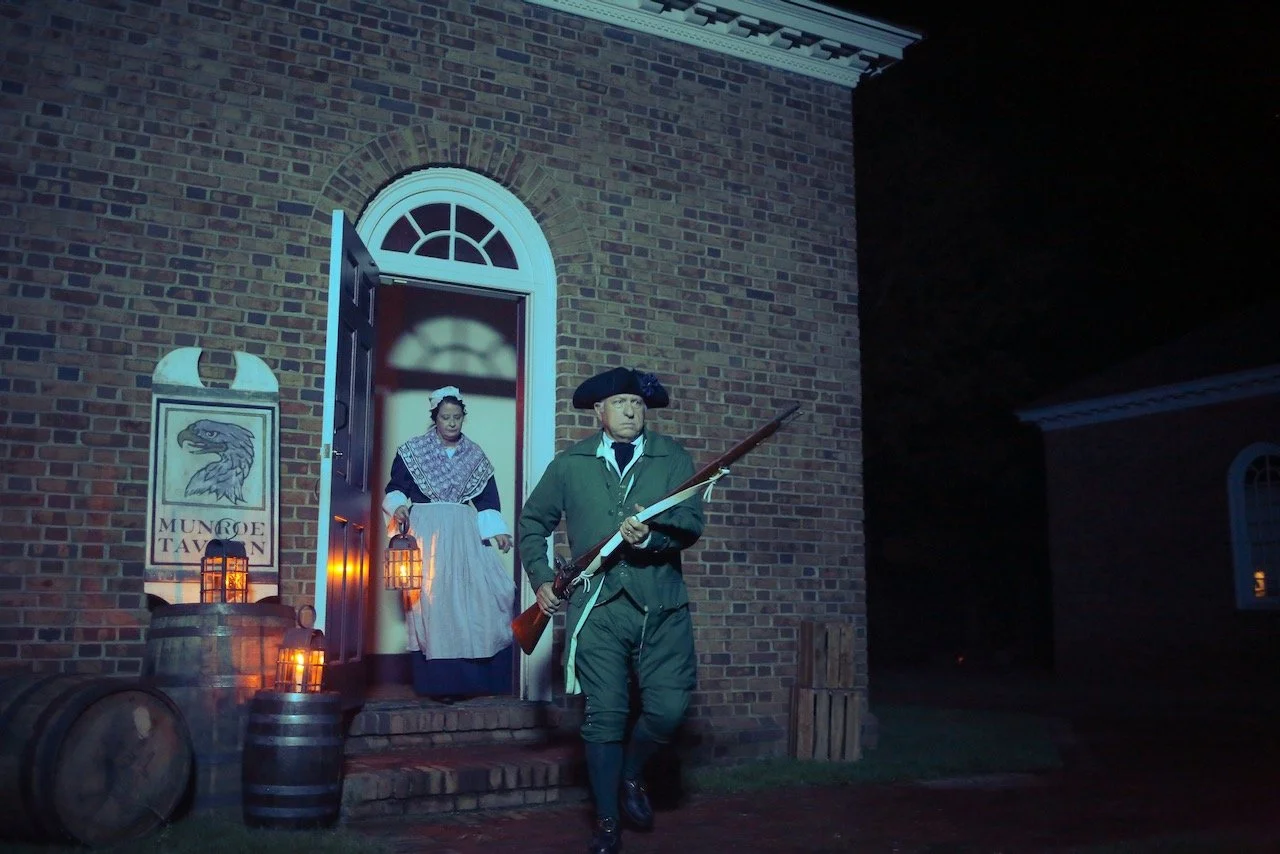
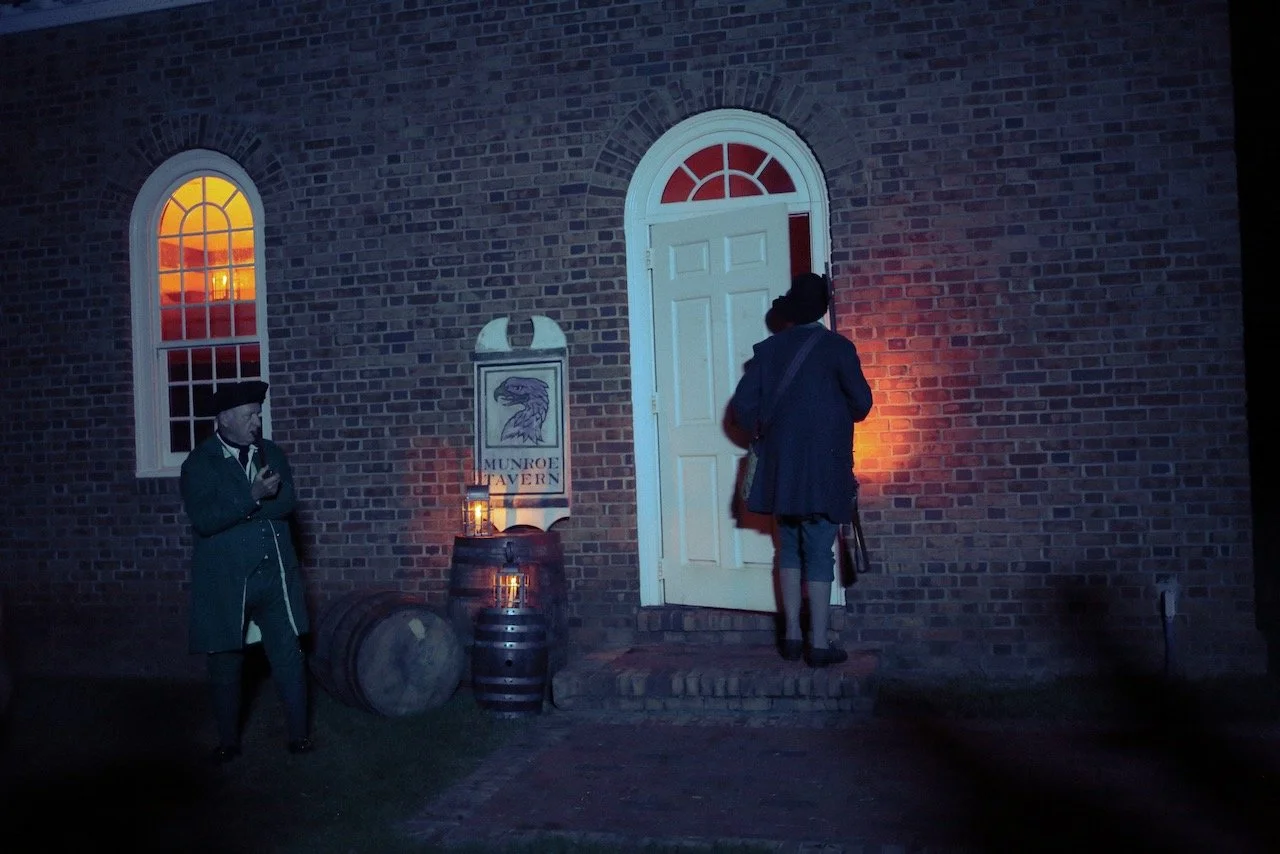
I was recently contacted by filmmaker Zach Kincaid of Red Hill Town Films in Washington, D.C., to create a tavern sign for An Appeal to Heaven, an epic historical adventure film set on the eve of the American Revolution.
The film tells the story of ordinary Massachusetts colonists on April 18, 1775—the night before the first battles of the Revolutionary War. Rather than focusing on famous historical figures, the narrative follows common men and women who must act with extraordinary courage to defend their faith, freedom, and way of life.
Historical Inspiration
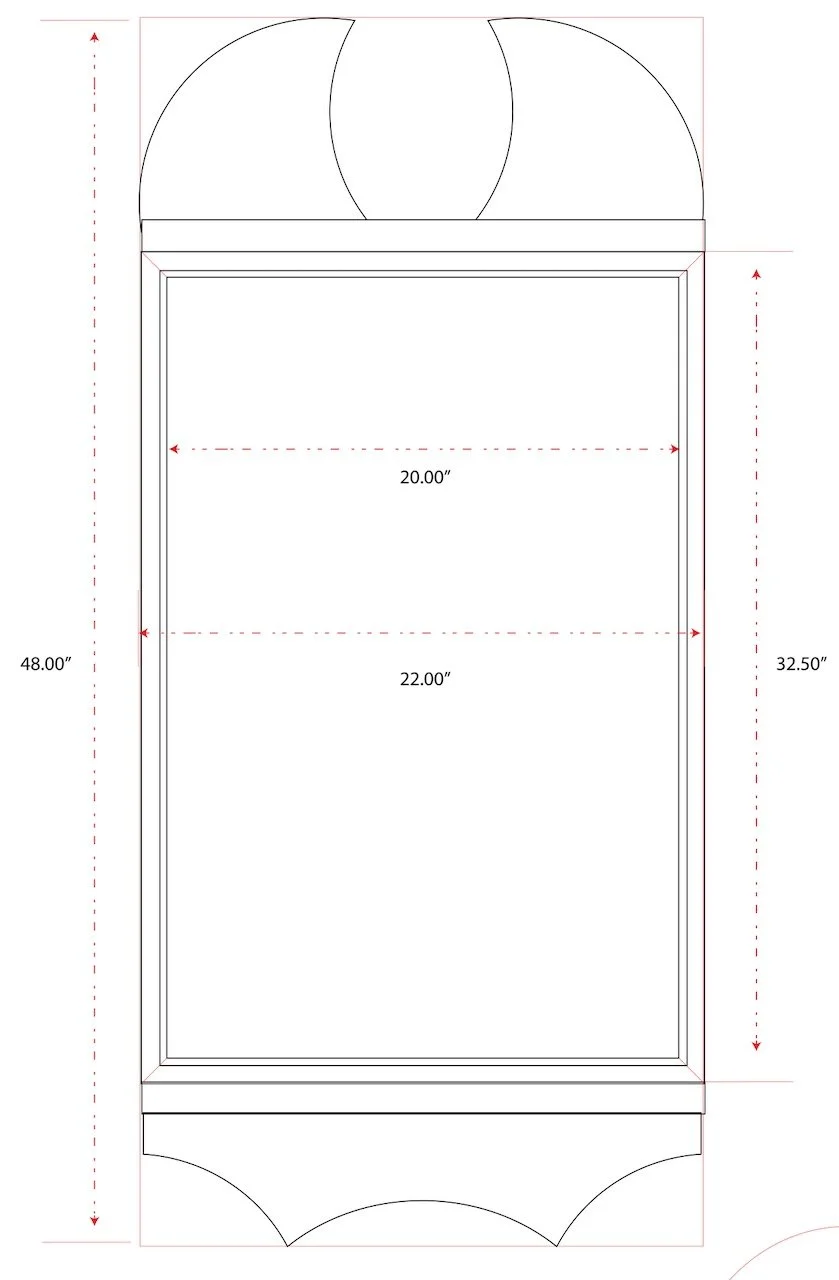
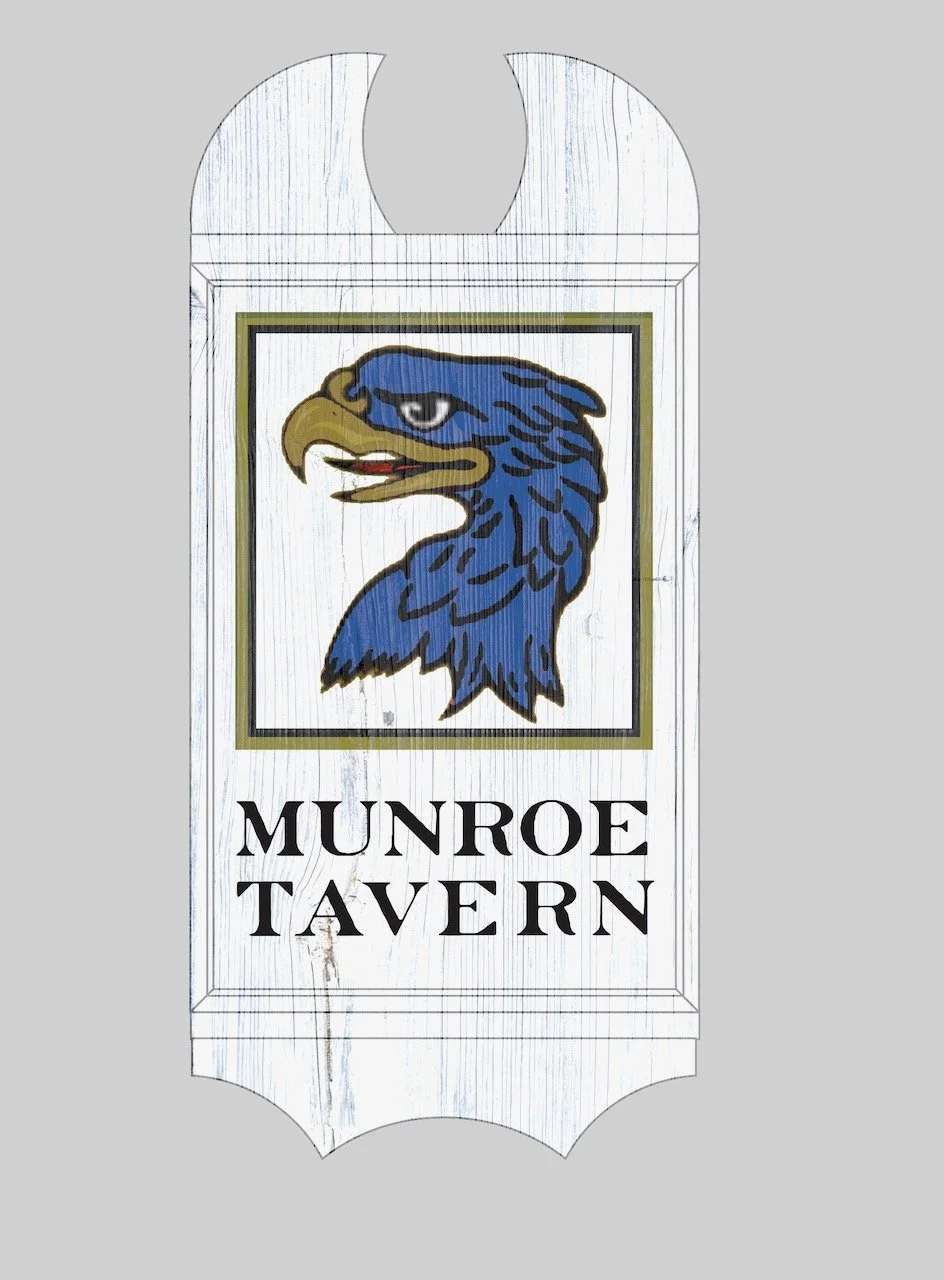
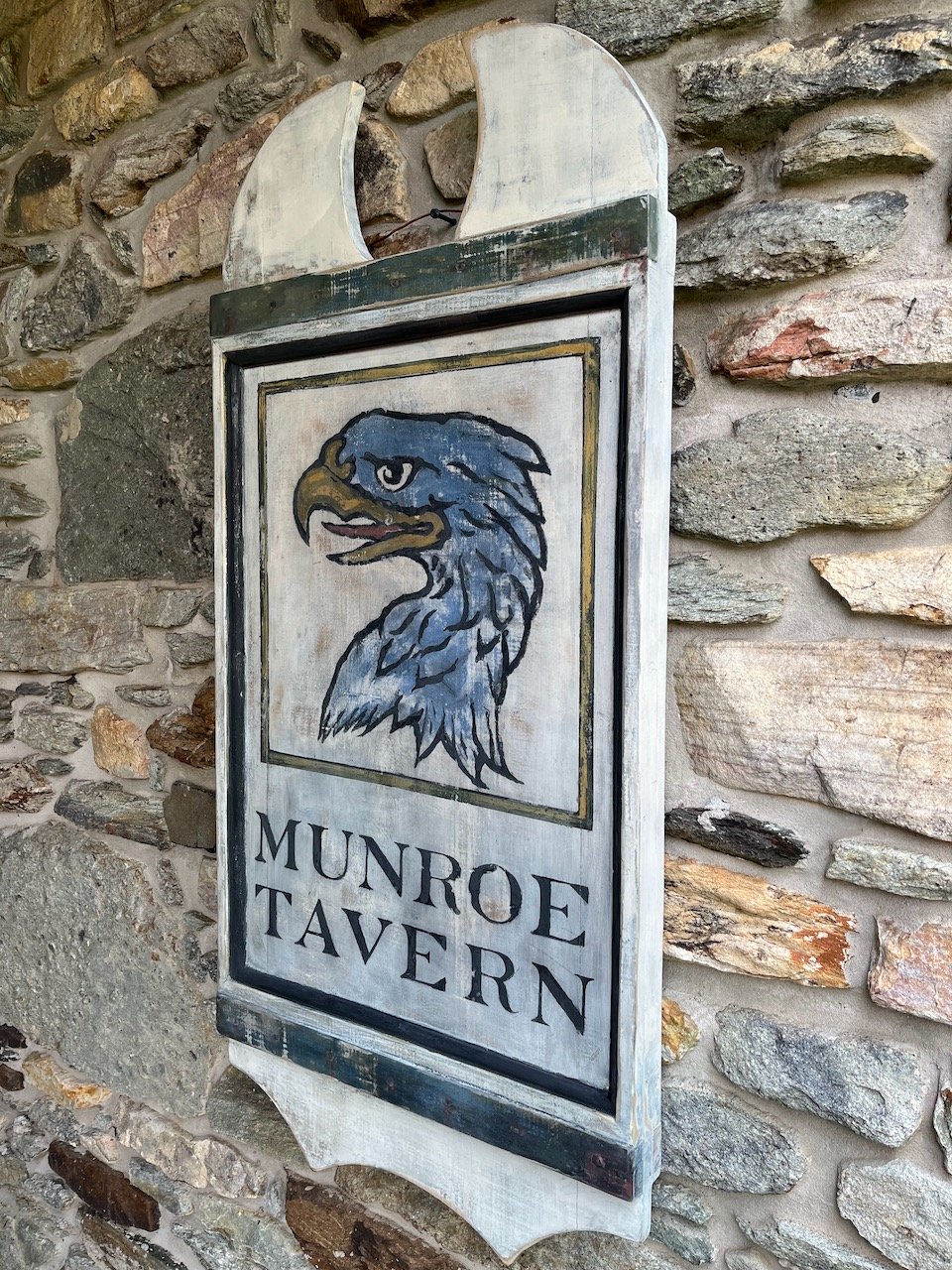
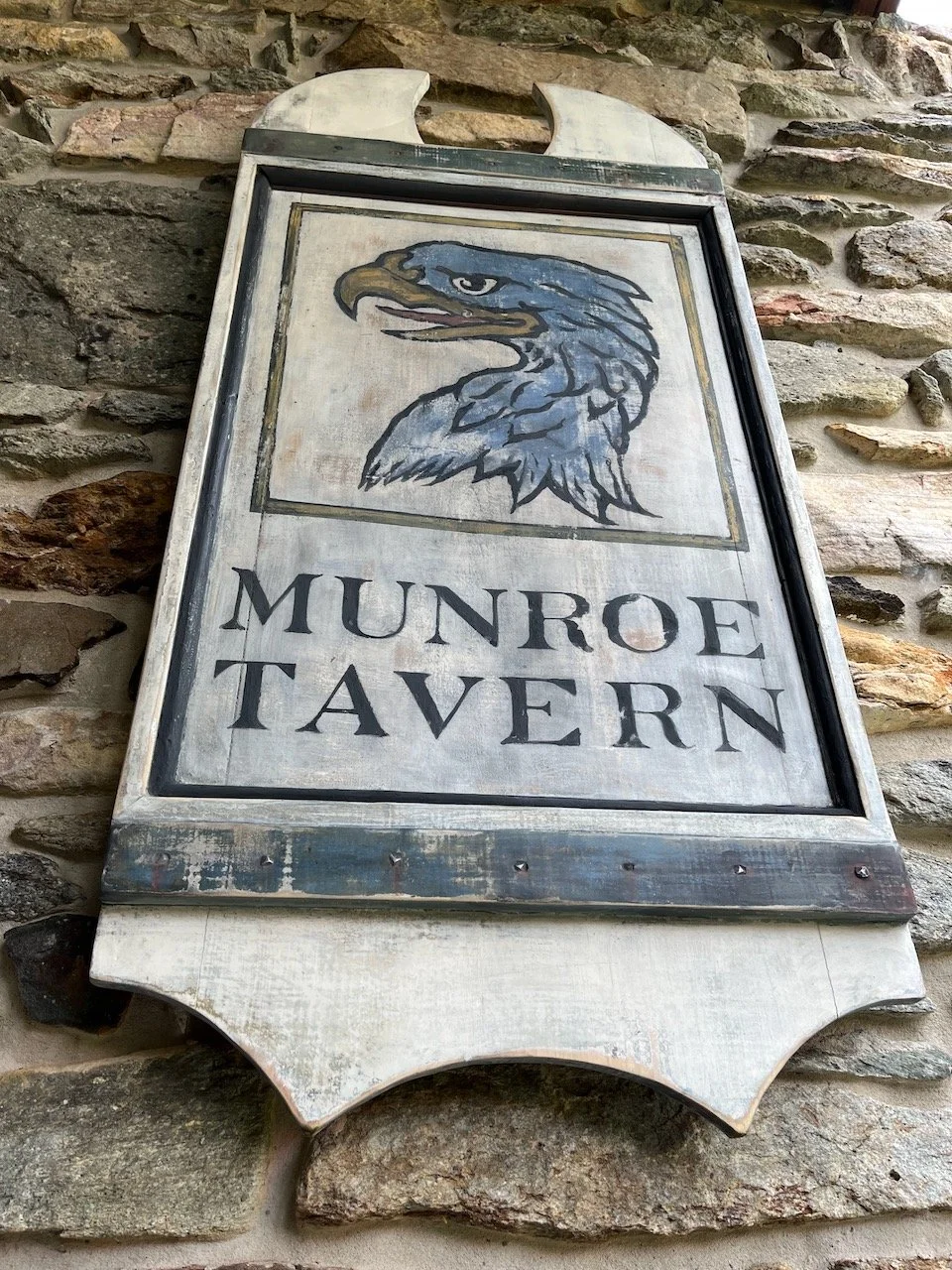
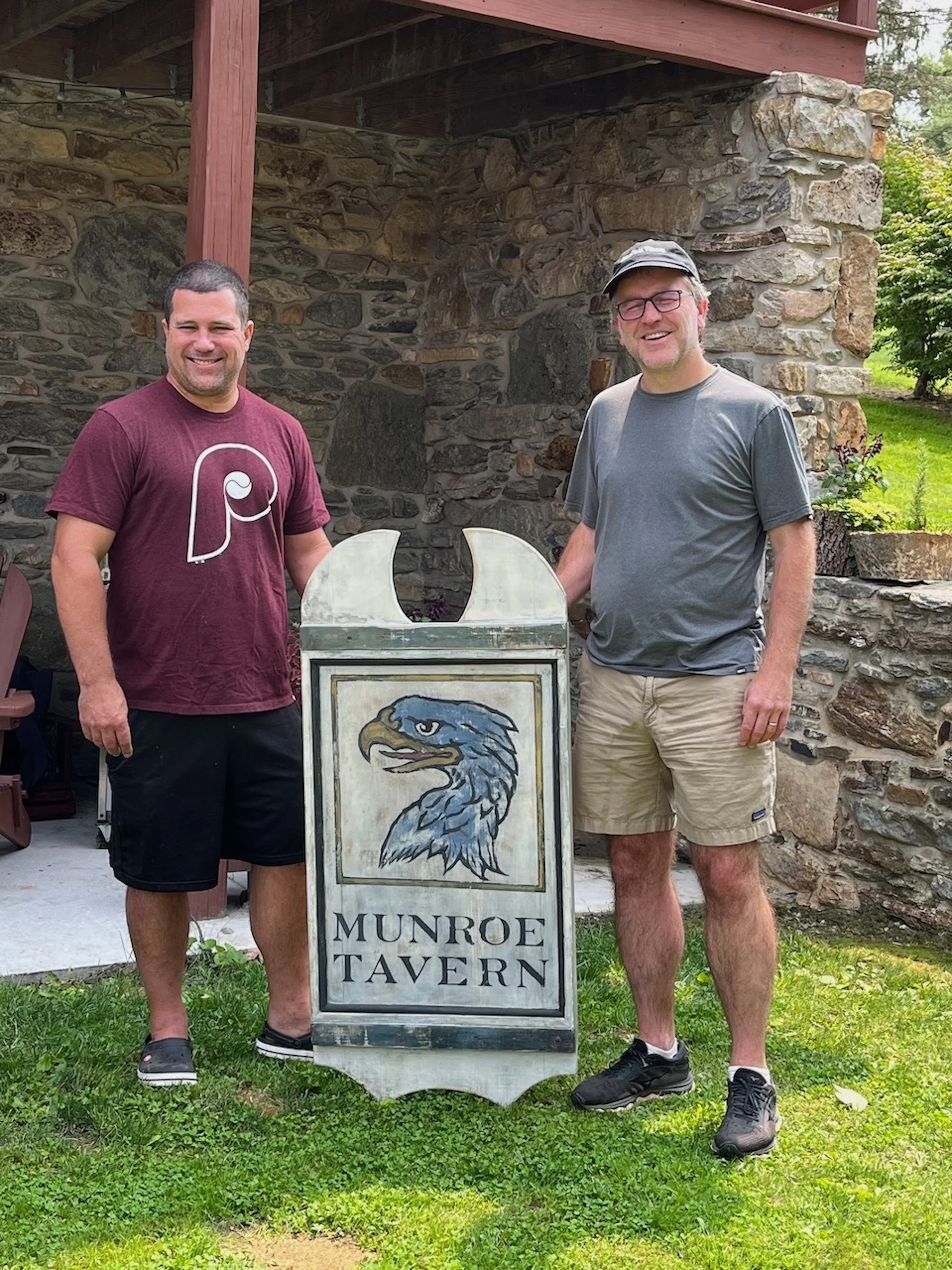
For this project, I based the overall form of the sign on the original Munroe Tavern sign in Lexington, Massachusetts. The sign's distinctive vertical format immediately appealed to me. Its elegant silhouette, featuring balanced decorative elements at both the top and bottom, draws attention to the central field where the imagery and lettering reside.
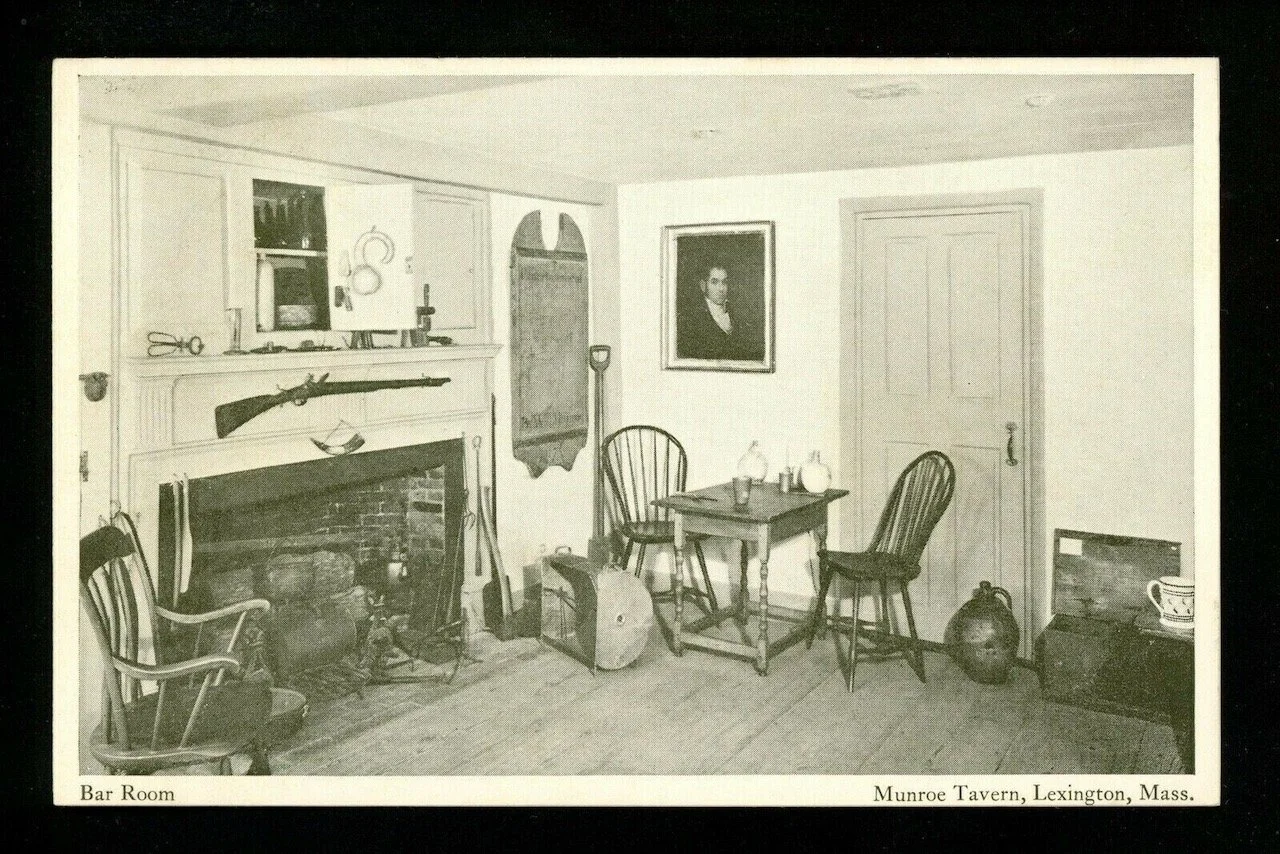
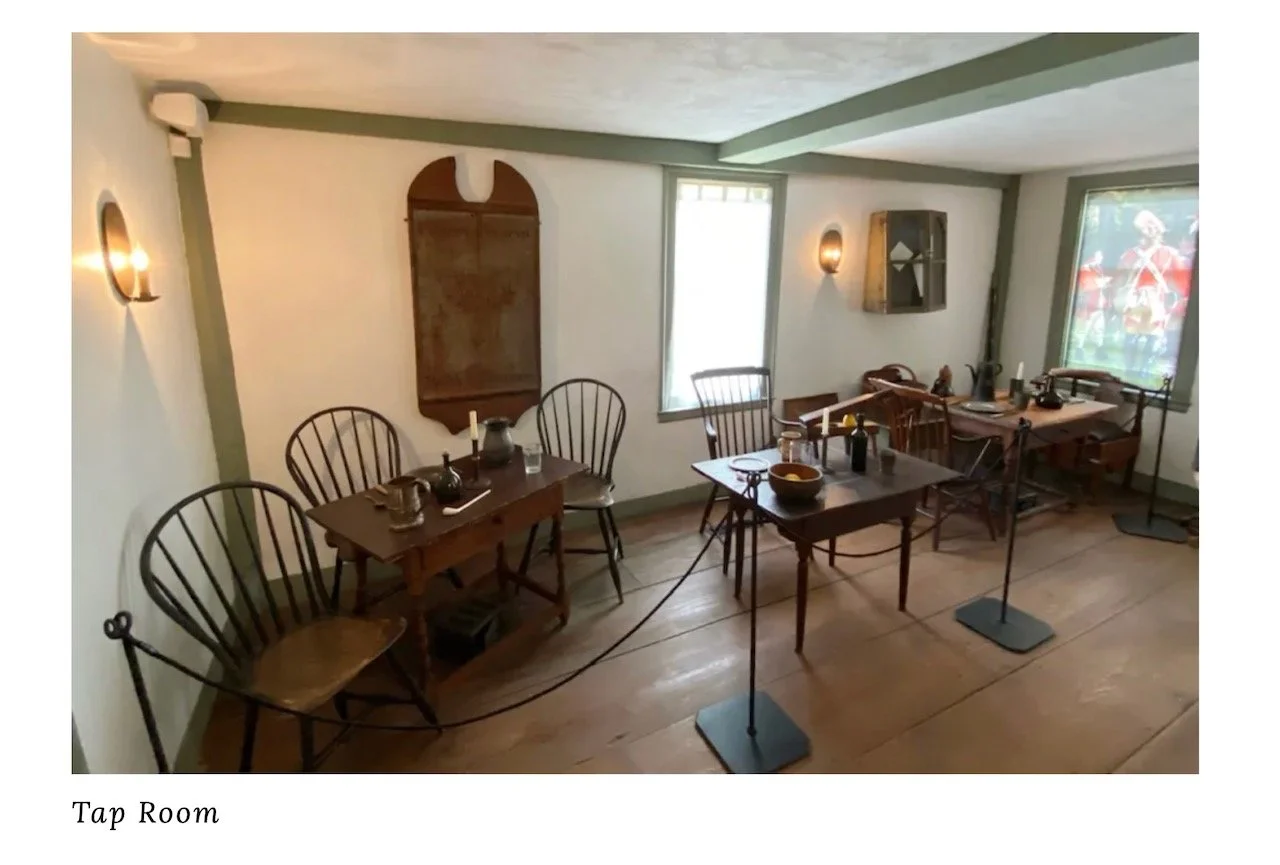
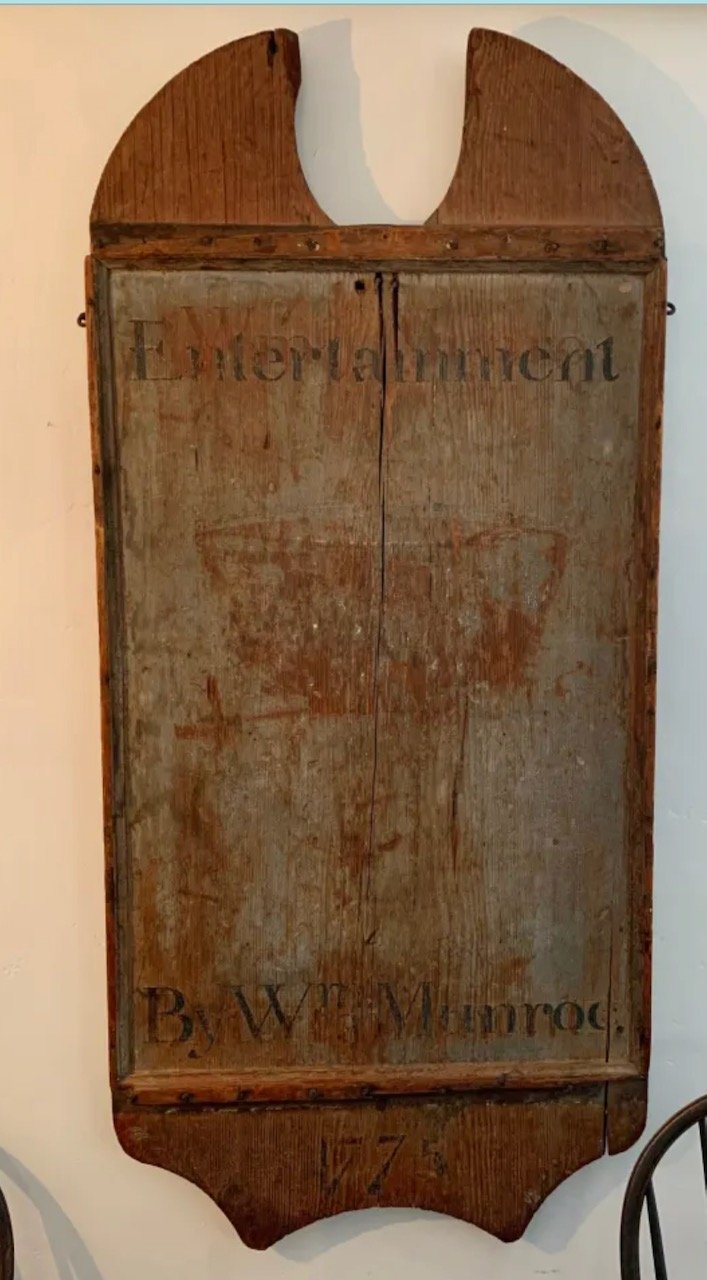
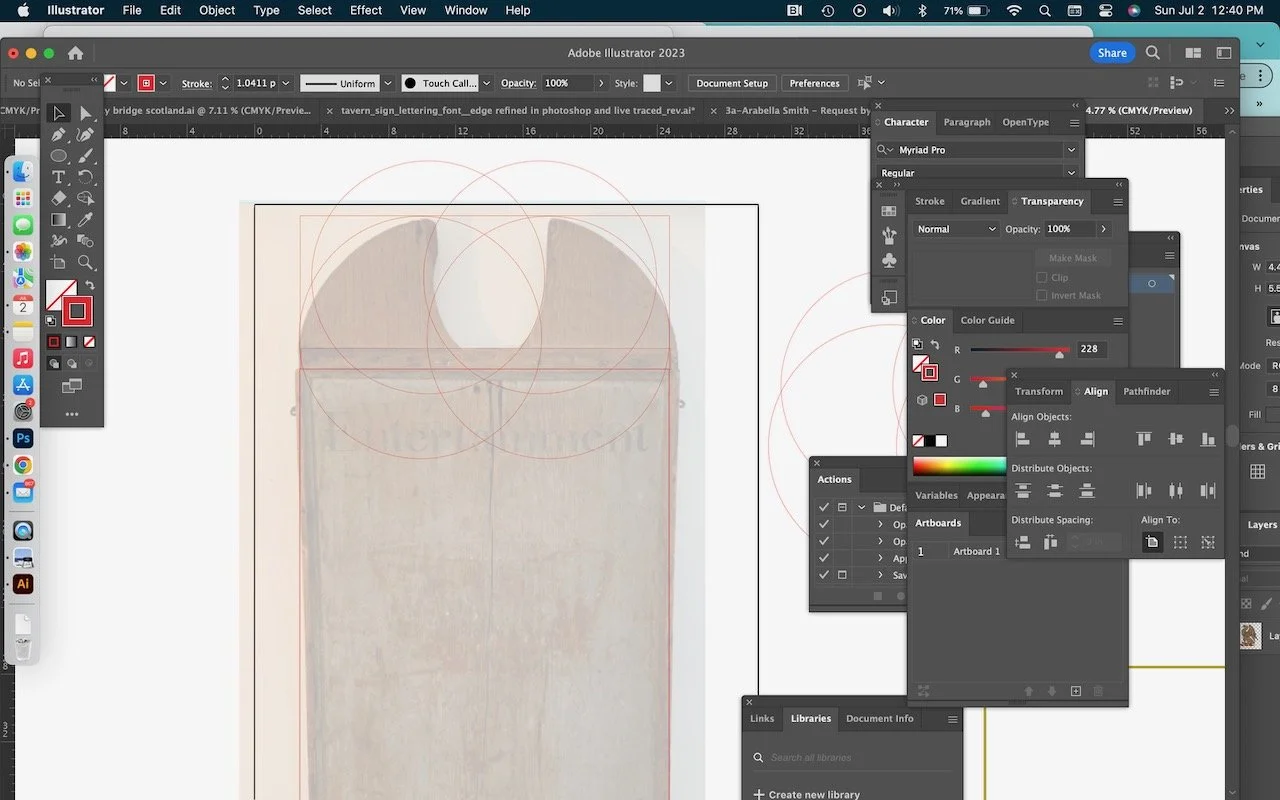
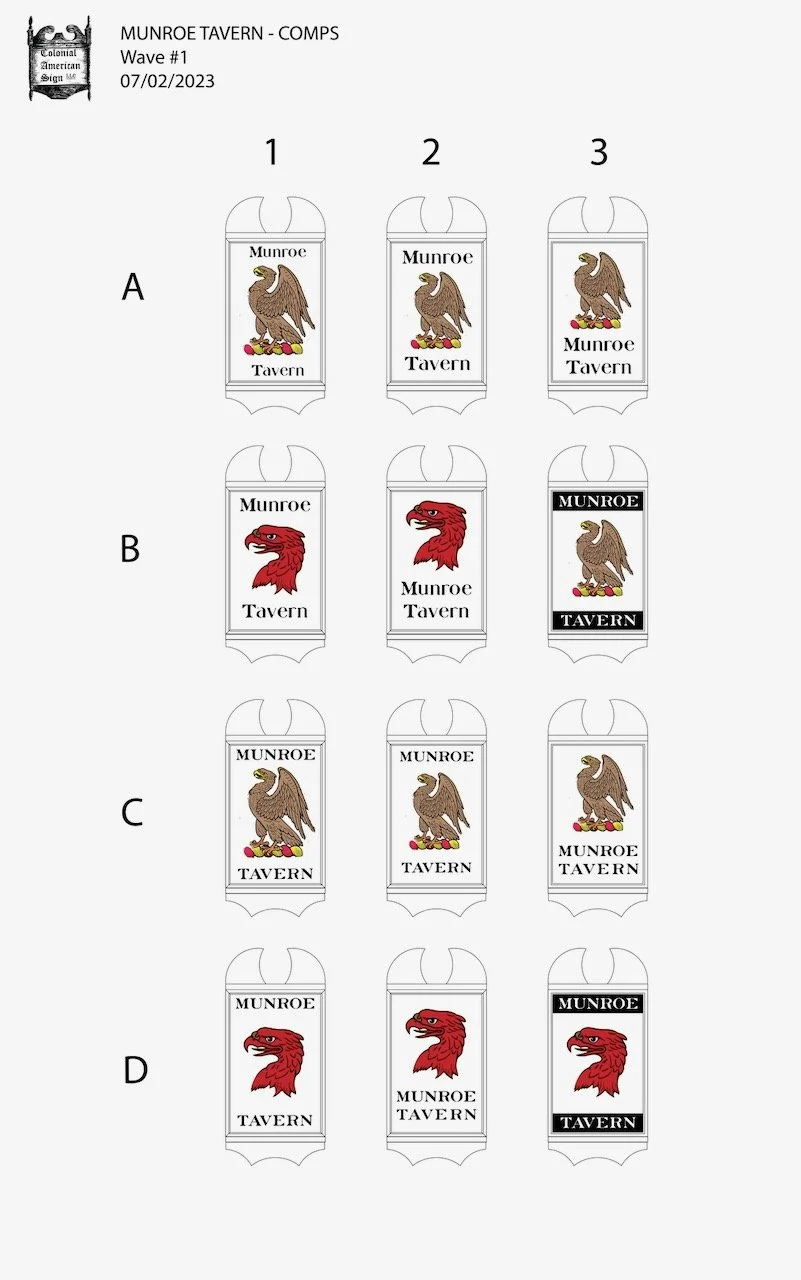
Like many successful tavern signs of the eighteenth century, the design places emphasis on clarity and visibility while still maintaining a strong decorative character. The original sign provided an ideal foundation for a reproduction intended for a historical film setting. Various design possibilities were explored prior to deciding that a heraldic eagle head in profile would best suit the need for clarity and historic appropriateness.
Construction and Materials
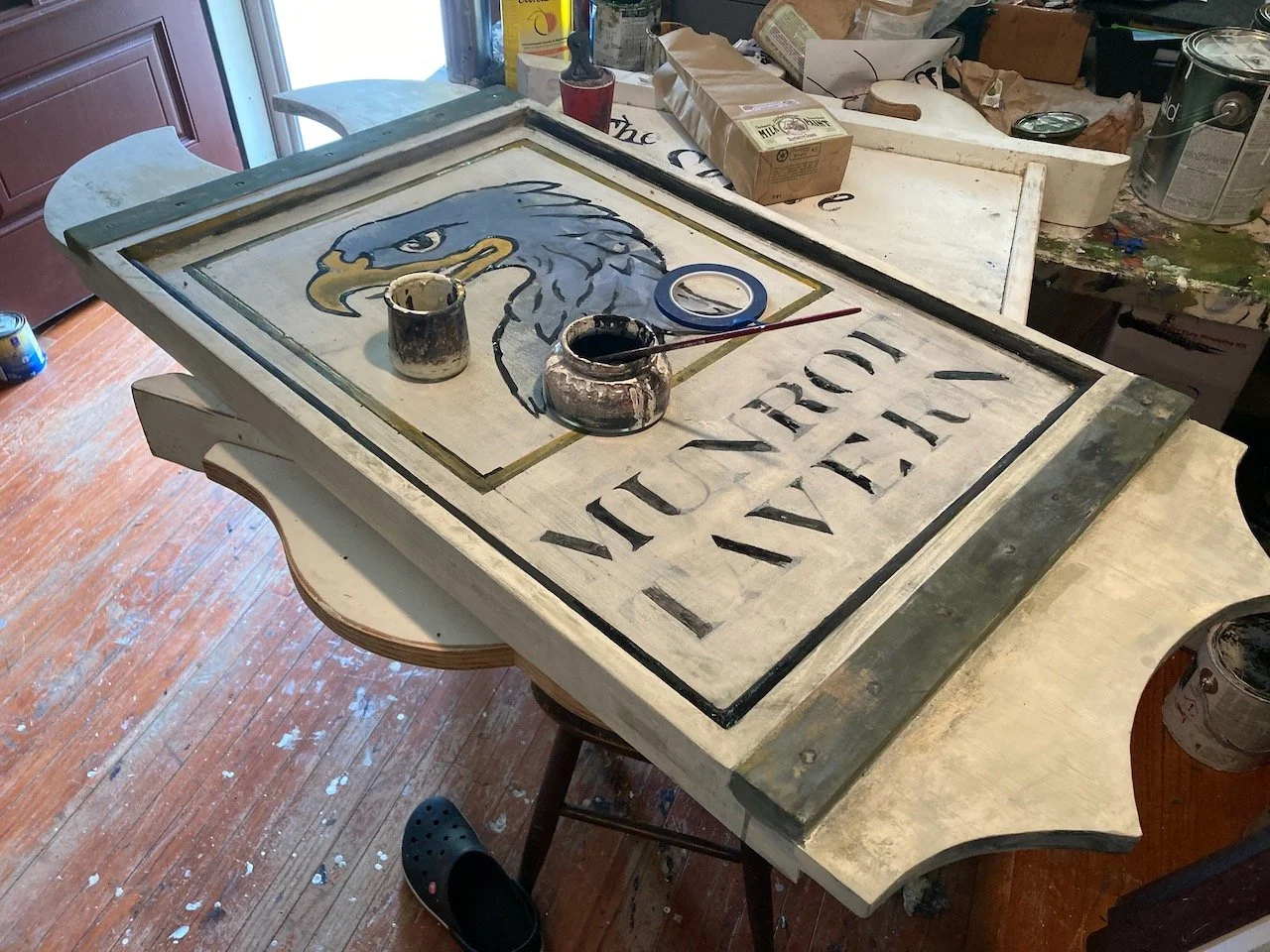
The sign was constructed from real wood in keeping with the film's commitment to historical authenticity. While most period signage receives only brief screen time, I believe authenticity is most convincing when it extends beyond what the camera may actually reveal. Small details matter.
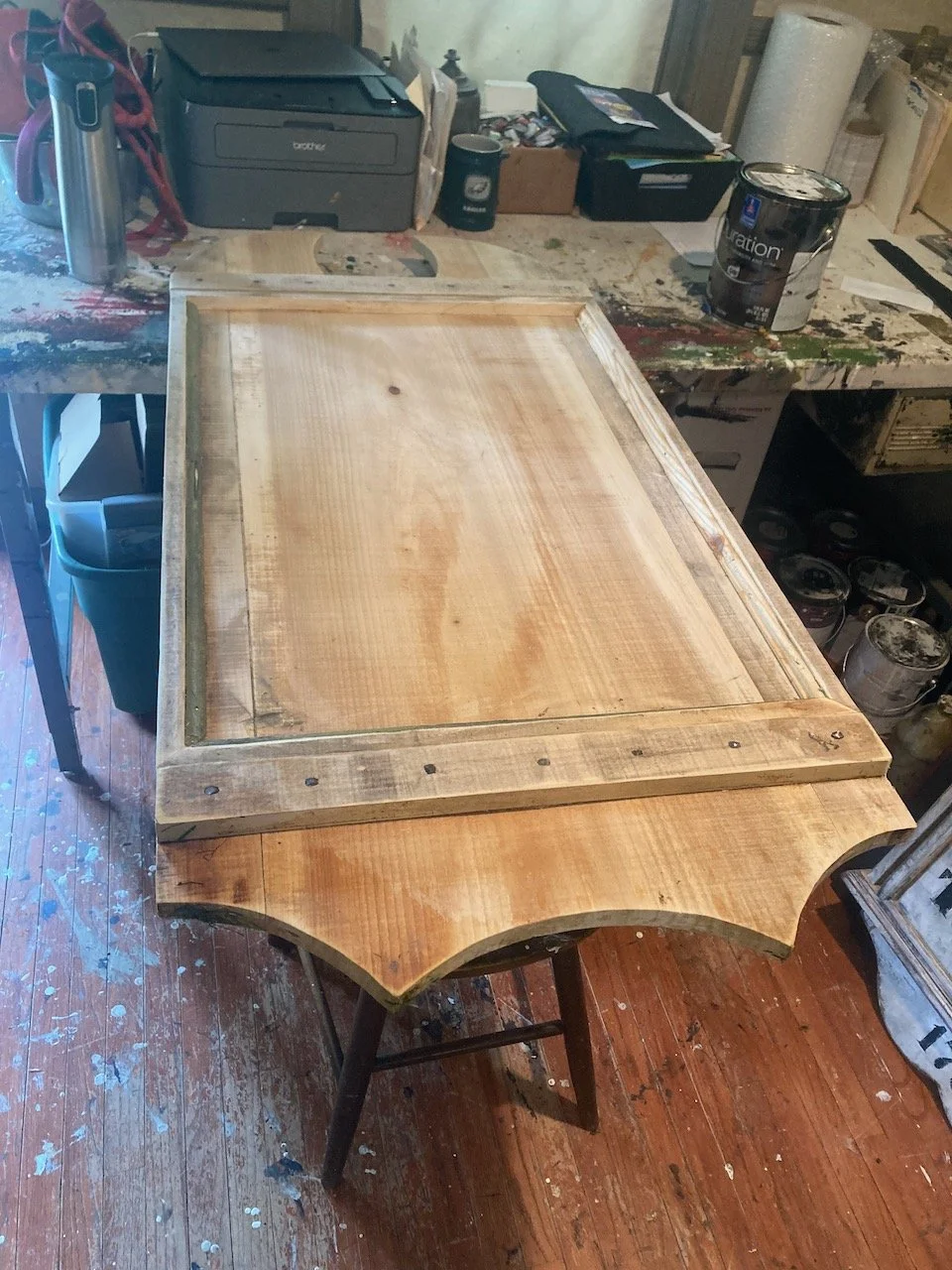
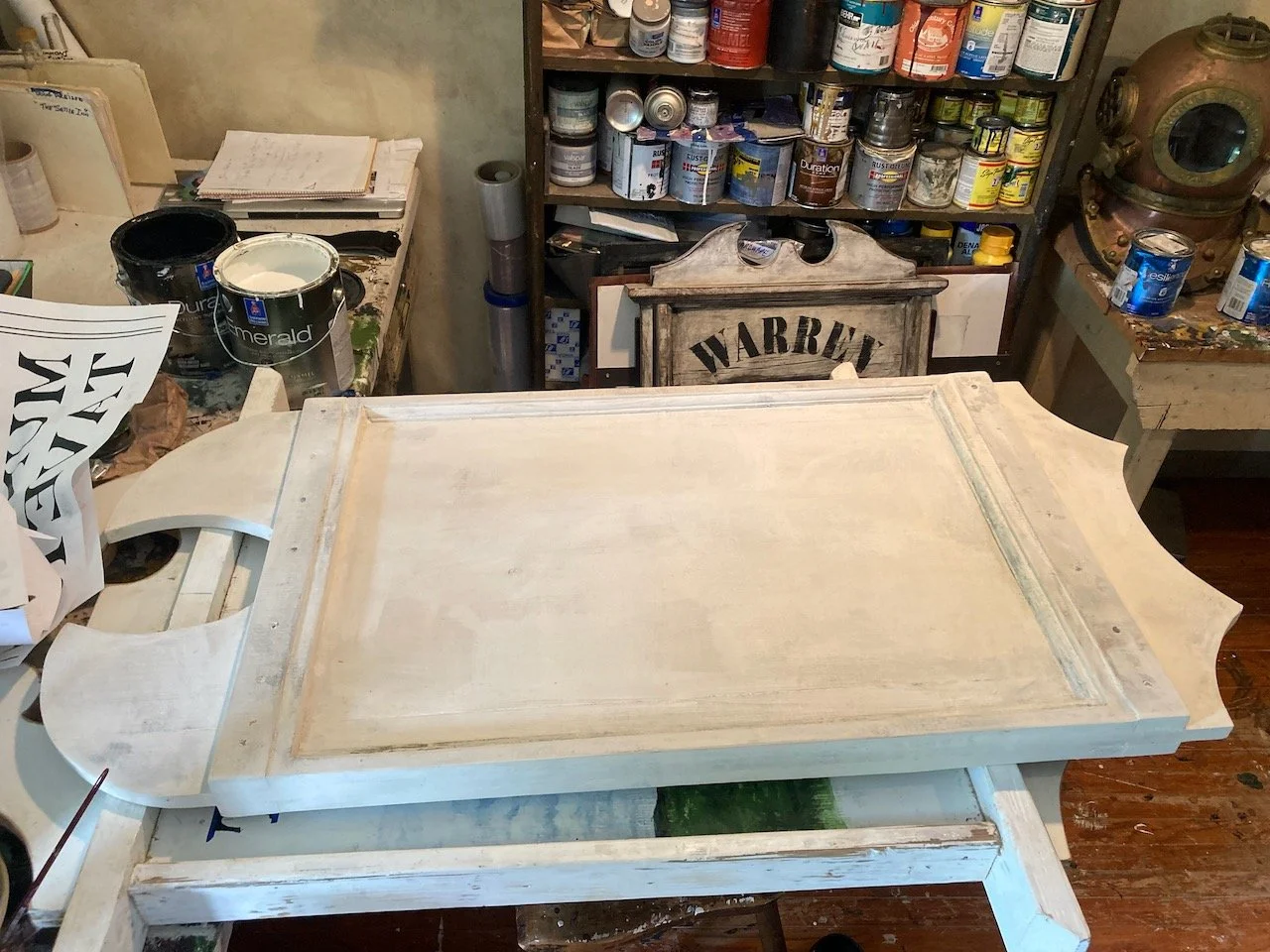
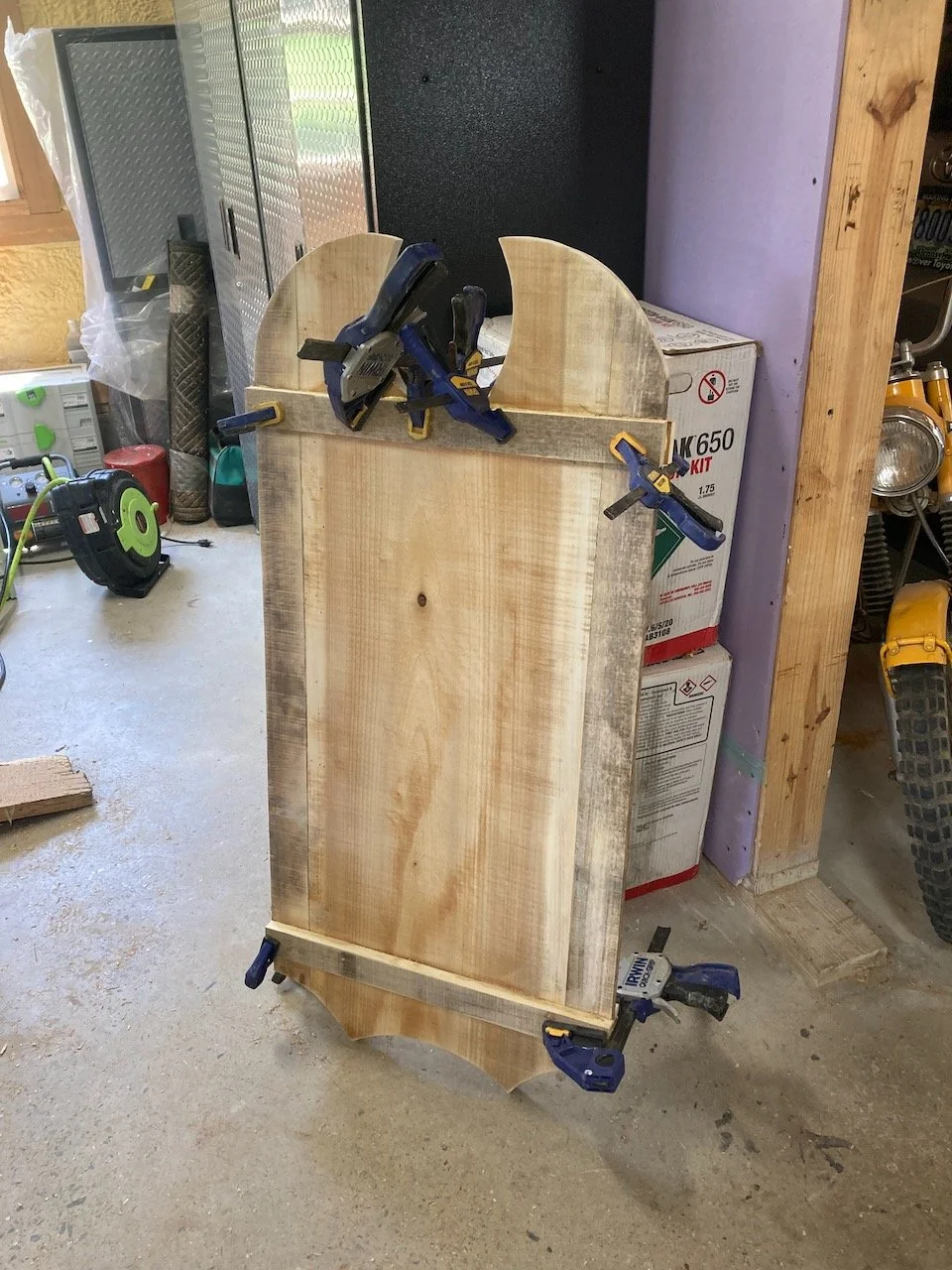
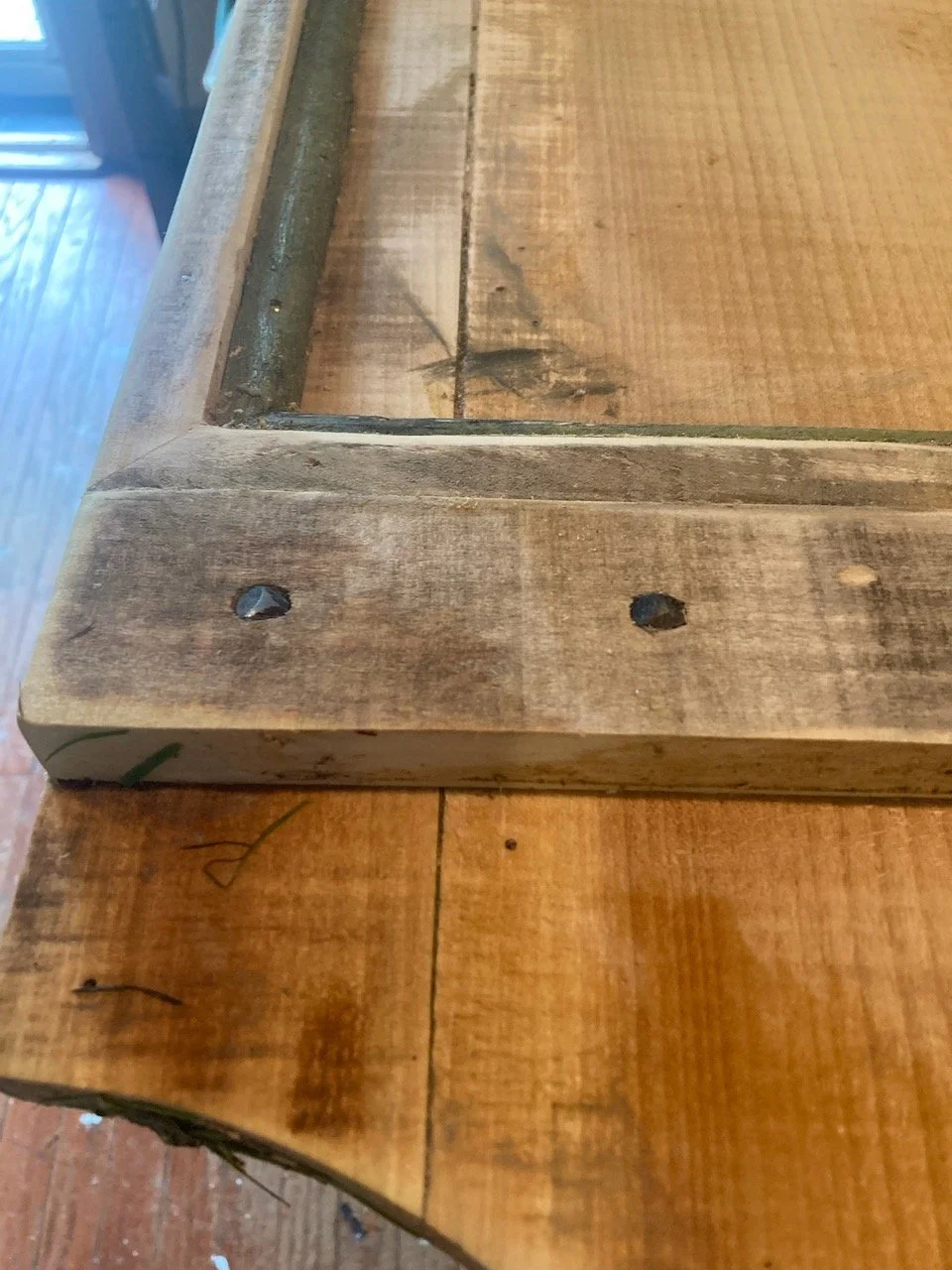
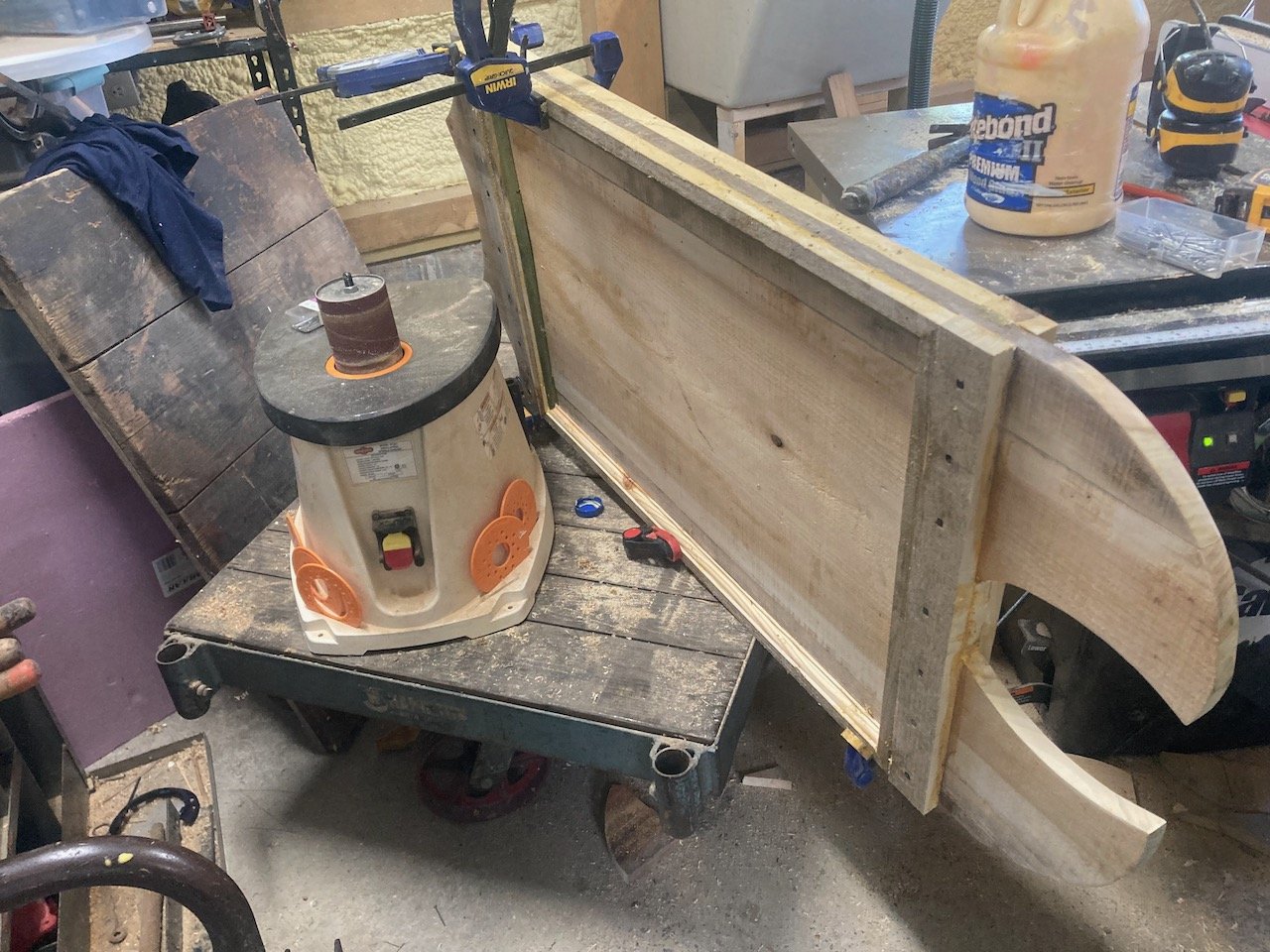
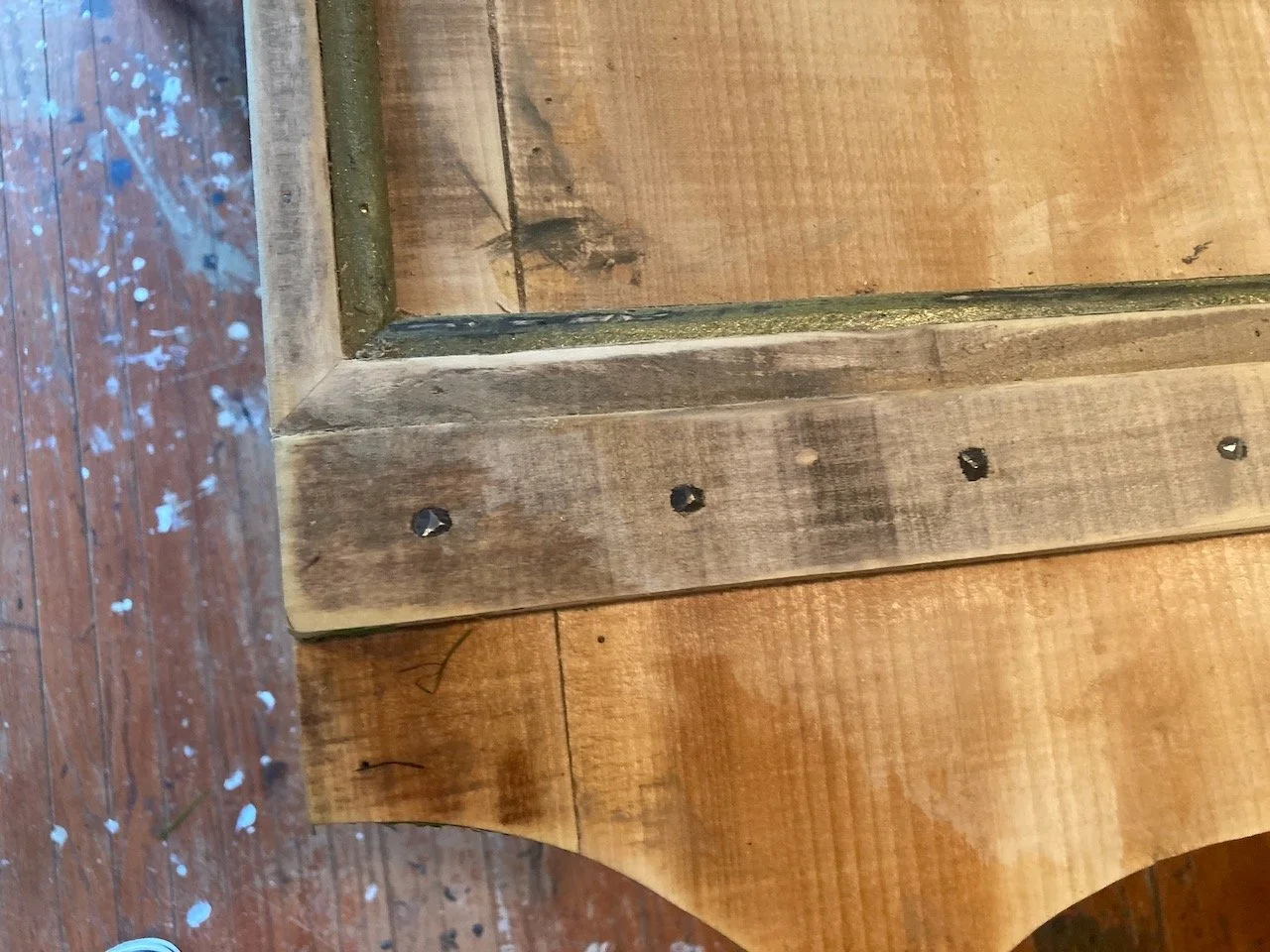
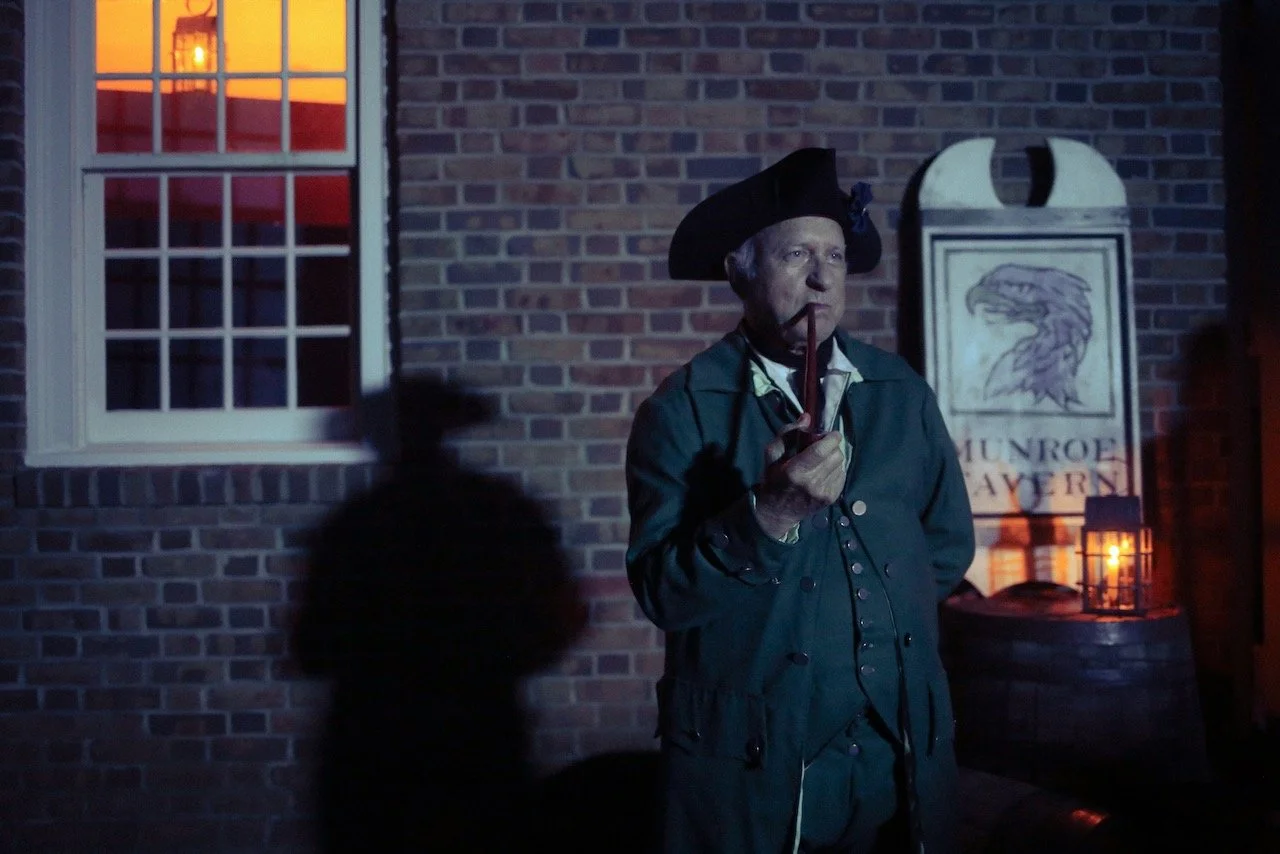
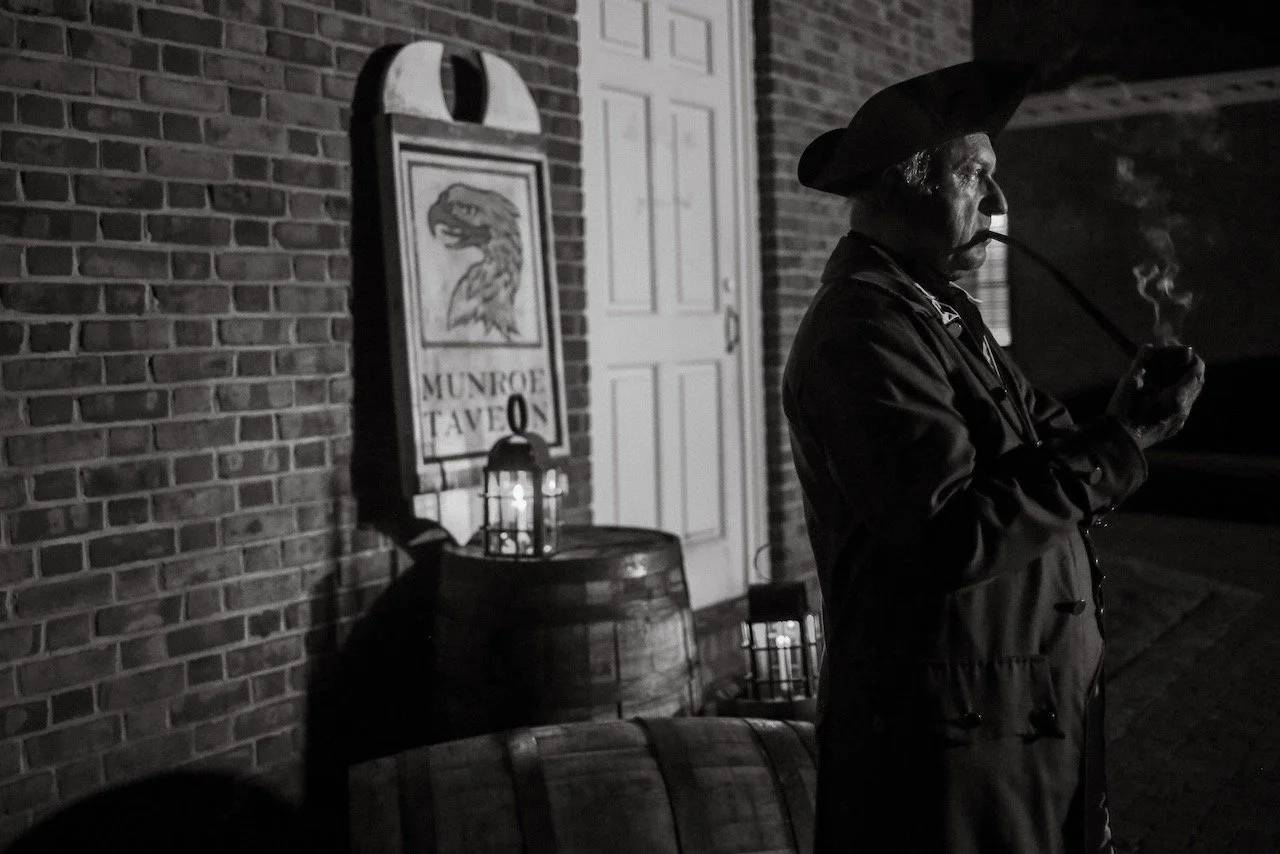
To that end, the sign was assembled using antique square nails and painted with historically appropriate milk-paint colors. Although the original Munroe Tavern sign served as the basis for the project, the central imagery was adapted to ensure the sign would remain easily recognizable to viewers within the context of the film.
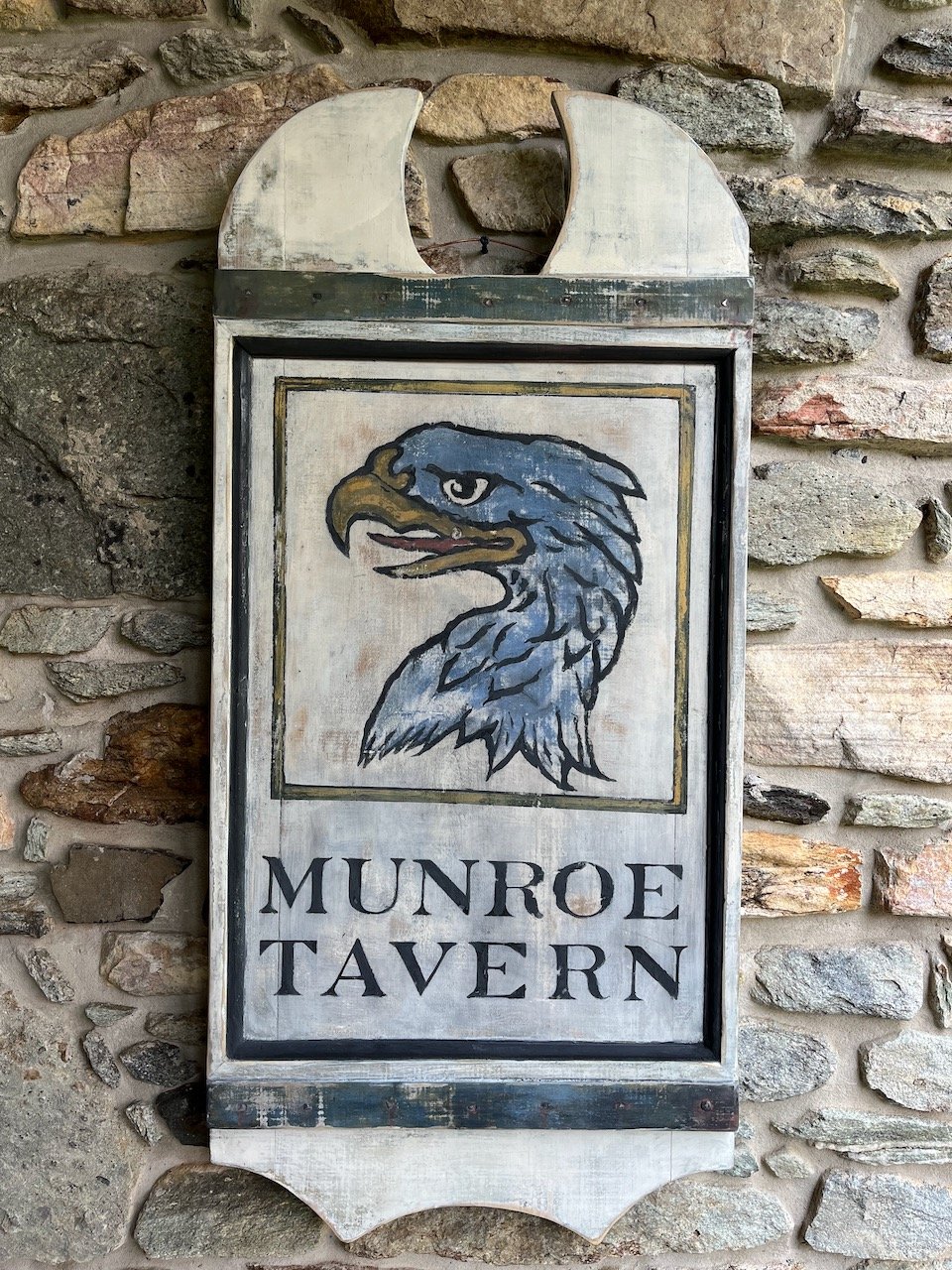
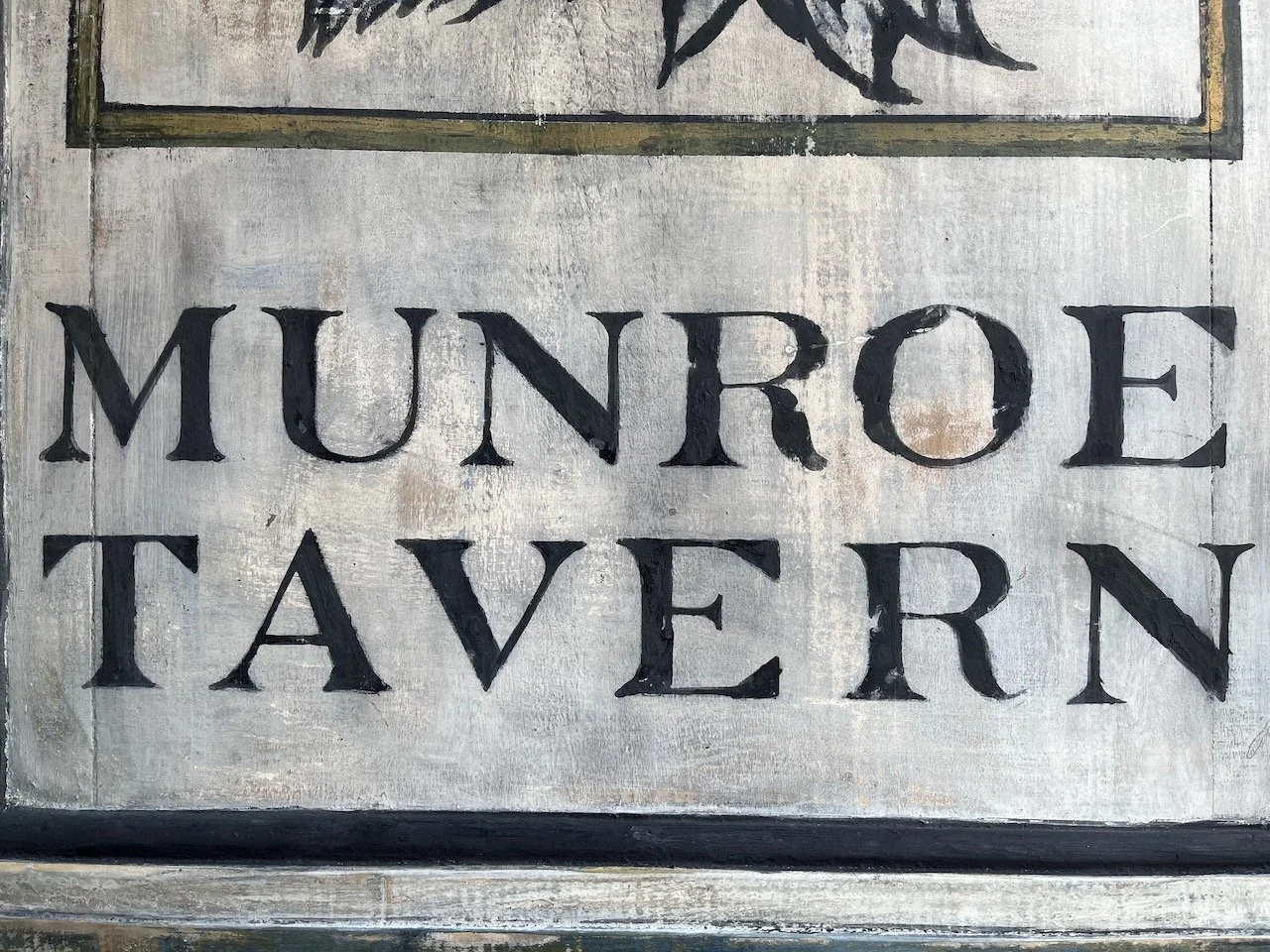
The focal point became a boldly painted eagle's head rendered in profile, evoking the heraldic imagery familiar to the eighteenth century. Beneath it, the words "Munroe Tavern" were painted in a strong Roman-style letterform, allowing the sign to function effectively both as a period artifact and as a clear visual element within the production.
A Brief History of Munroe Tavern
The Munroe family's roots in Massachusetts trace back to William Munroe (1625–1719), who emigrated from England around 1651. The earliest portion of the tavern building was constructed in 1735 on land owned by David Comee. Ownership changed hands several times before William Munroe (1742–1827), the great-grandson of the original immigrant, purchased the property in 1770. In October 1774, he was granted a tavern license, just months before the outbreak of war.
On April 18, 1775, Munroe Tavern became an important gathering place for local colonists. That evening, Solomon Brown returned from Boston and reported seeing British troops on the road. Before dawn the following morning, British forces arrived in Lexington, where the first shots of the Revolutionary War were fired on the town common.
Later that day, the tavern served as headquarters for Colonel Hugh, Earl Percy, and approximately one thousand British reinforcements. The dining room was converted into a temporary field hospital while weary soldiers consumed food and drink. During the occupation, John Raymond—a Lexington minuteman who had fought earlier that day—was forced to tend bar for the British troops. When he attempted to escape, he was shot and killed by the soldiers.
Aging the Sign
One of the more interesting challenges involved determining the degree of weathering the sign should exhibit.
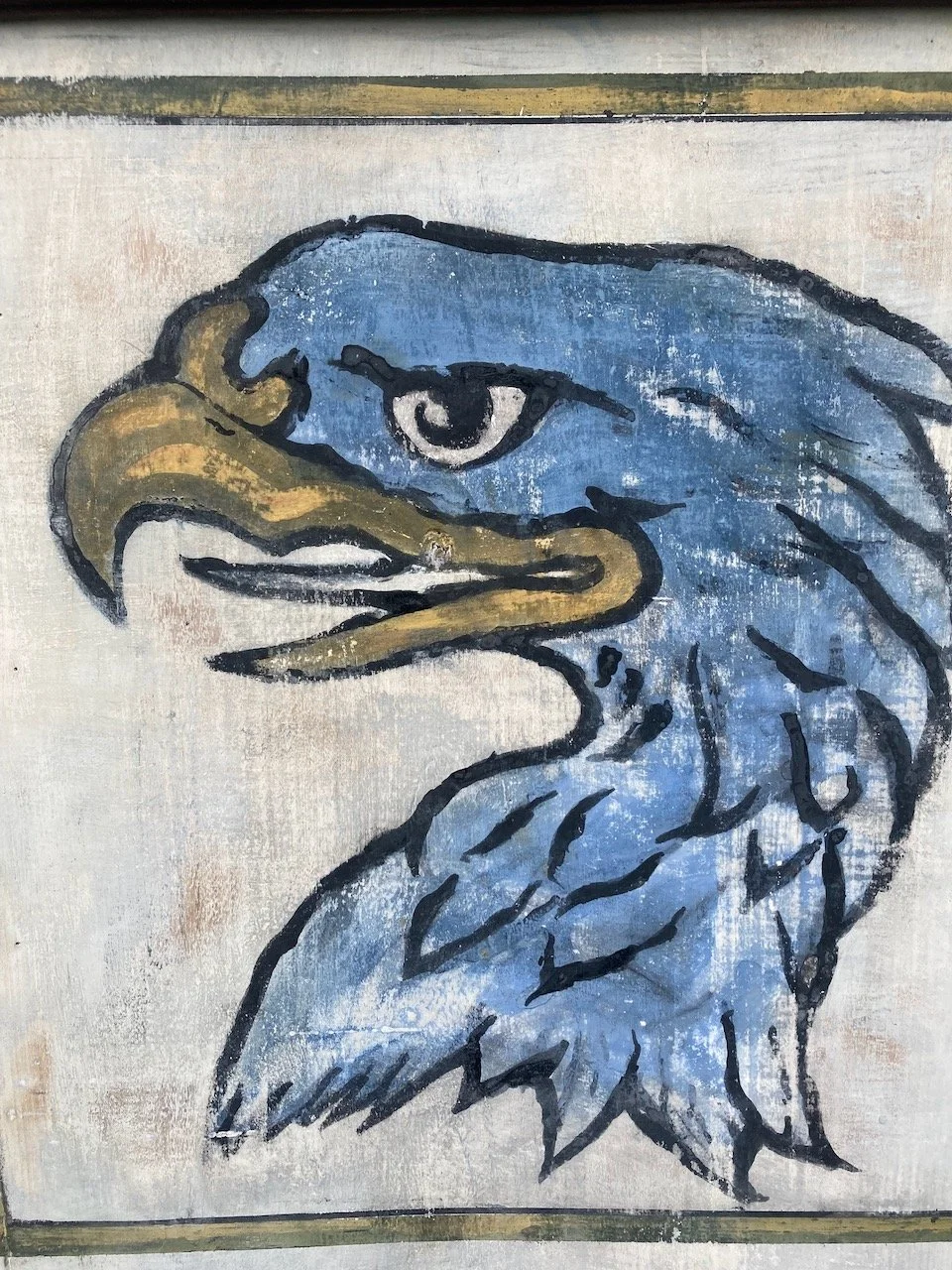
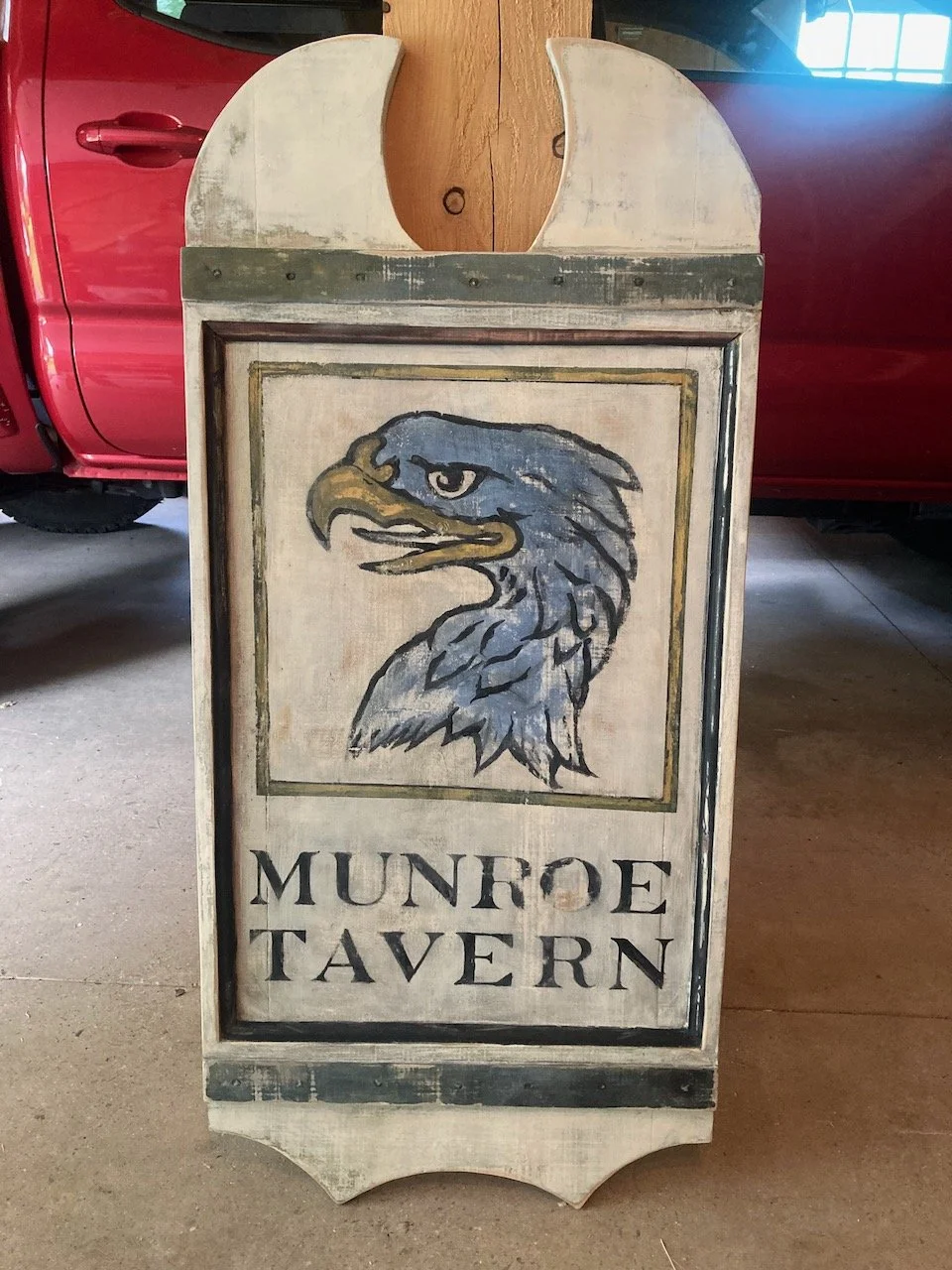
Historically, the tavern had been operating for only a few months before the events depicted in the film. A heavily deteriorated sign would therefore have been inaccurate. At the same time, a freshly painted sign can sometimes appear out of place within a historical production.
My goal was to find a balance between those extremes. The finished piece was given a modest degree of aging—muted colors, softened edges, and subtle weathering that suggest a sign already exposed to the elements, while still remaining appropriate for a relatively new establishment.
Art Meets Film
Projects such as this represent a rewarding intersection between traditional craftsmanship and modern storytelling. Tavern sign painting is a centuries-old art form, while filmmaking offers new ways to bring history to life for contemporary audiences.
*Photographs taken on the set were provided courtesy of Red Hill Town Films.
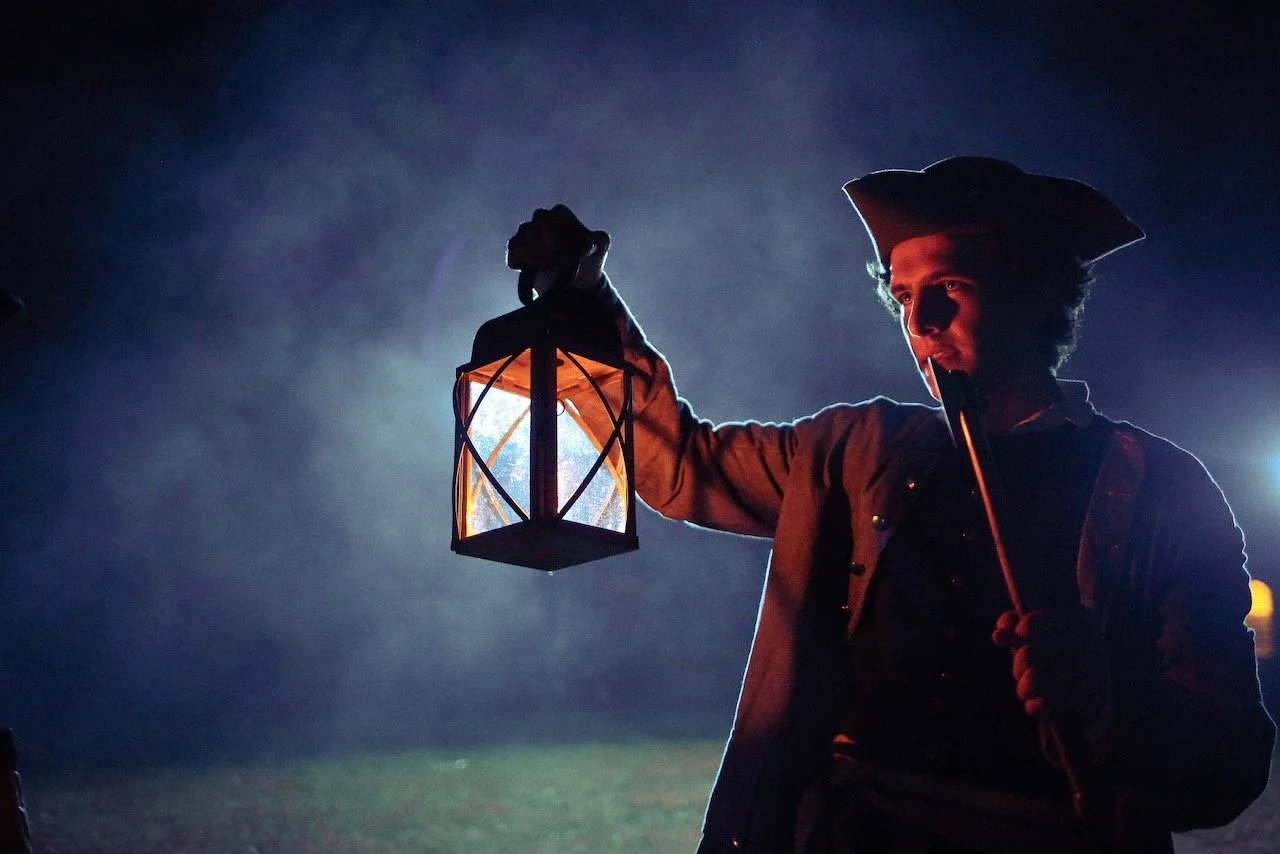
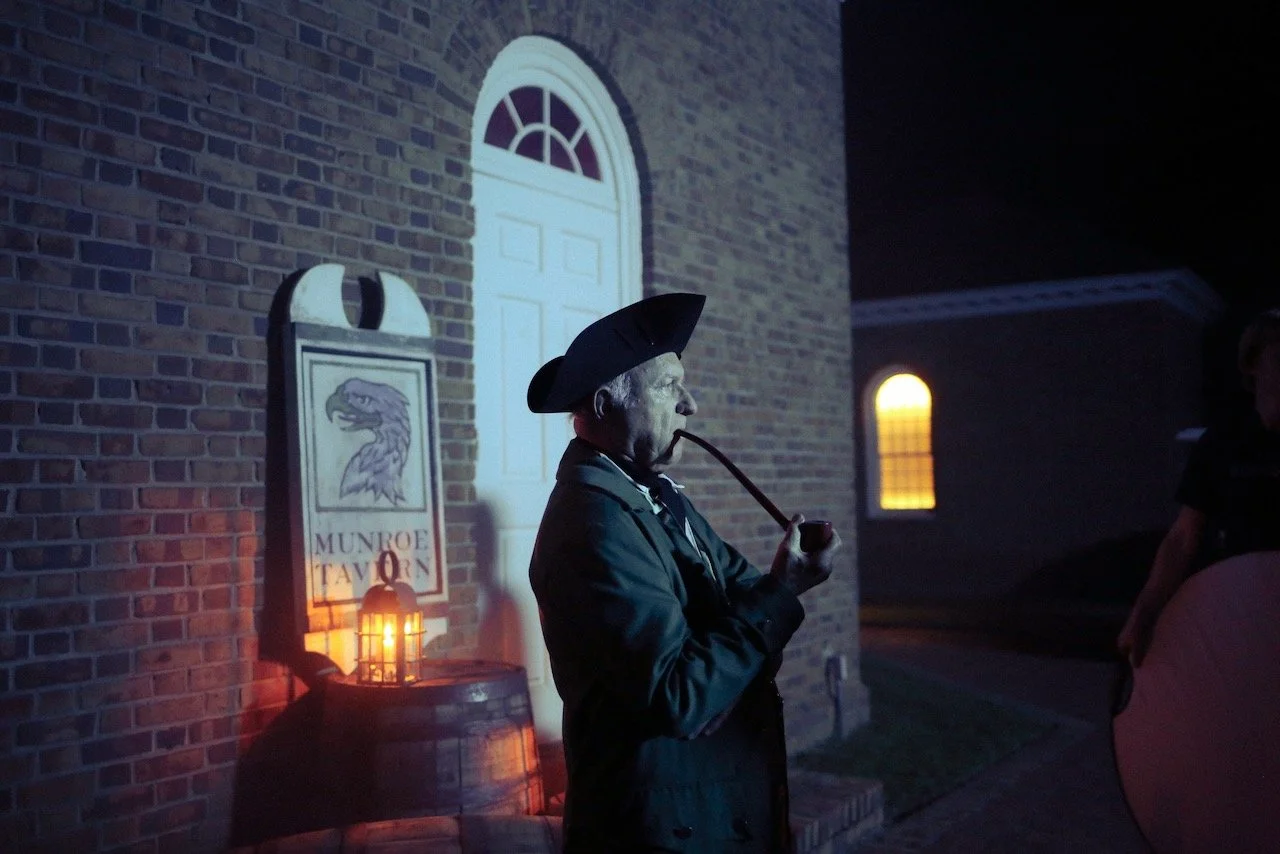
It was an honor to contribute, in a small way, to a film centered on the events that helped shape the birth of our nation. I hope the sign serves its purpose—not only as a prop, but as another small thread connecting viewers to the people and places of America's Revolutionary past.
Videos and LINKS
Here is some short video footage of the sign, for your viewing pleasure :)
Below are some links to websites mentioned in this blog post -